
Most organisations that work with chemicals or hazardous materials understand the importance of temperature-controlled storage. In industrial environments, there are many chemicals with specific storage requirements that must be kept within strict upper and lower temperature limits. Safety managers know that failure to maintain these conditions can have serious consequences – both in terms of product integrity and safety.
As temperatures continue to rise, these risks are becoming even more significant. The UK Climate Change Committee states that heatwaves above 40°C could become increasingly common by 2050. For businesses storing temperature-sensitive chemicals, now is the time to review whether existing storage facilities are equipped to maintain safe operating conditions and reduce the risk of chemical instability.
At Safety Storage Systems UK, we understand the importance of effective temperature-controlled storage. In this article, we explore the key considerations for designing temperature-controlled storage that protects your people, products, and facility.
Why Temperature-Controlled Storage Matters
Temperature-controlled storage is vital for hazardous chemical safety. Many chemicals possess very specific storage requirements, as set out in their Safety Data Sheet (SDS). If temperatures swing too high or low, some industrial chemicals can degrade, crystallise, or solidify, rendering them ineffective. More worrying still, extremely high temperatures can mean that many chemicals are being stored above their flashpoint increasing the risk of fire.
When ambient temperatures rise, pressure can build up inside containers, increasing the risk of leaks, fires, or explosions. In addition to posing a serious safety risk, heat-related chemical leaks can also result in significant environmental damage and costly operational disruption.
With average air temperatures now around 1.4°C above pre-industrial levels according to the Met Office, and temperatures in the UK and Ireland continuing to warm at record pace, it’s likely we will all experience more extreme weather events that could compromise safe chemical storage.
Failure to manage this risk by maintaining stable storage conditions will cause:
- Chemical degradation and reduced effectiveness
- Increased risk of reactions, pressure build-up, or contamination
- Reduced product lifespan
- Potential safety and operational risks
Designing an Effective Temperature-Controlled Storage Solution
In order to control the effects of excessive heat, you will need to specify an effective temperature-controlled storage solution. There are several options to consider here:
Site location and environmental conditions – Direct sun protection can go a long way to reducing the temperature inside your chemical storage. Moving storage units away from direct sunlight and locating outdoor stores in shaded areas can help minimise heat gain.
Insulation and construction materials – Selecting a double skinned container with appropriate insulation can also protect chemicals from ambient heat fluctuations and fire exposure. PIR/PUR boards provide excellent insulation for temperature-controlled units, offering high thermal efficiency to prevent heat ingress in summer.
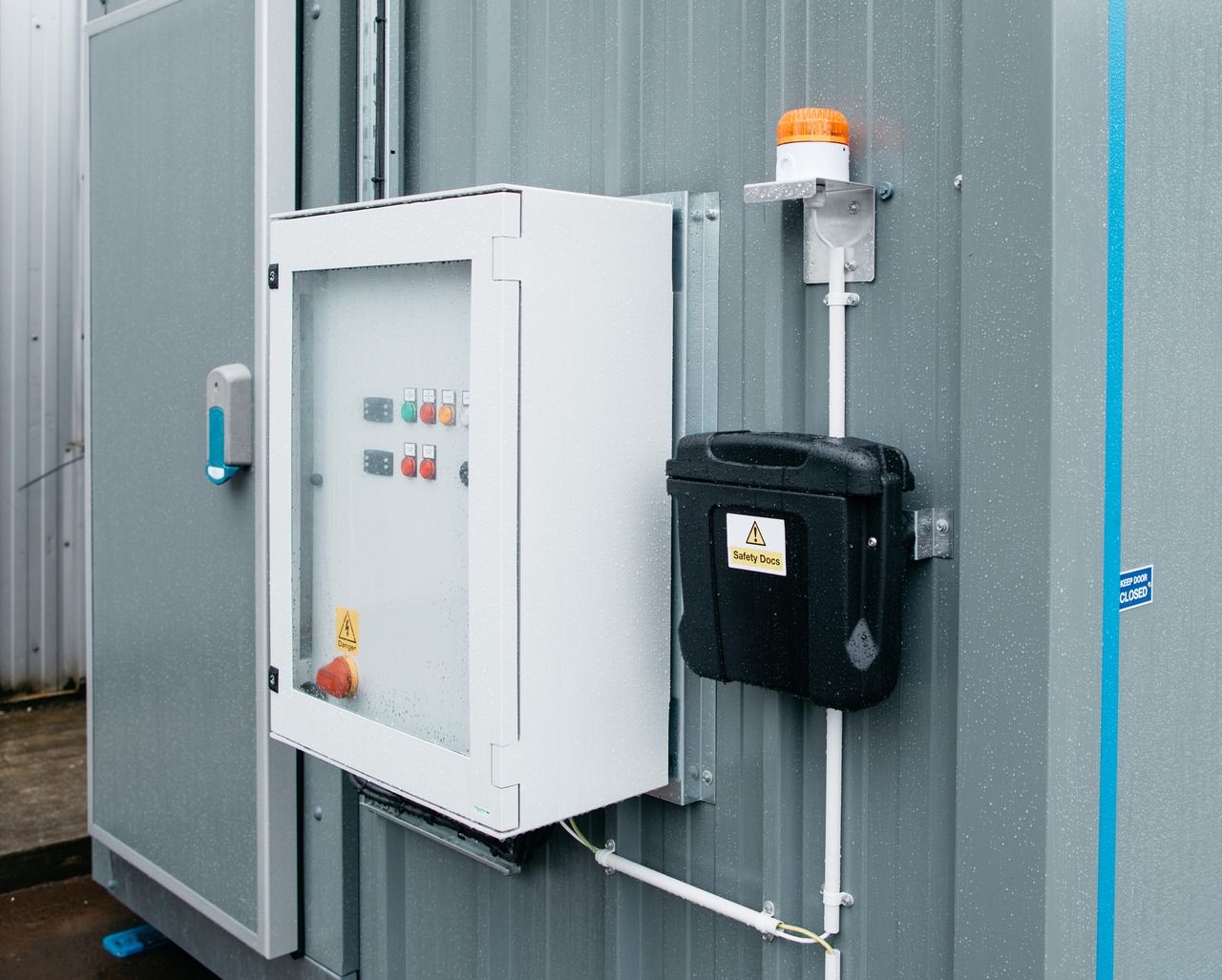
Cooling systems – In some cases, HVAC and air conditioning units can be integrated into climate-controlled storage buildings to automatically maintain temperatures, typically between 4°C and 24°C.
Ventilation and airflow – Proper airflow helps to prevent the dangerous build-up of hazardous fumes or vapours that increase the risk of fire. Look for a storage solution with adequate ventilation, or a cabinet that is fitted with extraction fans to continuously circulate air and remove excessive heat.
Storage capacity and operational requirements – Finally, think carefully about your safety storage capacity requirements and how often you will need to access the contents.
Selecting the right combination of measures to manage ambient heat and prevent exothermic runaways will depend heavily on the type of products that you need to store and the nature of your facility. You’ll need to pay particular attention to storage requirements if you use either:
- Flammable liquids: these products have a flash point below 37.8°C, which means they ignite easily at room temperature.
or
- Combustible liquids: they typically have flash points above 37.8°C and require higher temperatures to ignite. They should not be stored with flammable liquids.
Both types of liquids burn readily, but are categorised according to their volatility. You should therefore follow regulatory guidelines such as HSG71 Chemical Warehousing from the UK Health and Safety Executive (HSE) to conduct risk assessments when storing dangerous goods.
Monitoring and Compliance Requirements
With hazardous chemical storage in place, businesses storing dangerous substances are well protected, but as heat spikes and extreme weather events increase in number and severity, it’s a good idea to keep a close eye on internal temperatures. What may be a safe storage environment in regular weather conditions can quickly become overheated when exposed to heatwave temperatures. If your chemical storage is poorly sized or inadequately specified, internal temperatures can quickly escalate.
In order to facilitate ongoing temperature management, it’s wise to implement:
- Continuous monitoring and alarm systems
- Automated data logging and reporting
- Regular inspection and maintenance routines
Ensuring this kind of rigorous monitoring regime not only provides protection for your people and premises, but also ensures you meet regulatory requirements.
According to COSHH and HSE guidelines for chemical storage, employers are required to demonstrate that they can control and mitigate risks from hazardous substances. Continuous temperature monitoring ensures your facility meets COSHH compliance regulations by generating irrefutable, automated audit trails.
As potential risks increase, it provides concrete proof that hazardous substances are stored within manufacturer-prescribed limits.
The Benefits of a Purpose-Built Storage System
Despite the cost advantages of using an existing indoor space for hazardous chemical storage, or even repurposing a single skin storage container for outdoor chemical storage, these options come with risks.
Without adequate controls, temperatures inside a non-insulated chemical store can reach 60°C when the ambient temperature is approaching 35°C. When located outdoors in direct sunlight, this type of metal container heats up quickly and with limited airflow acts to trap heat inside.
Opting for a purpose-built temperature-controlled storage unit, whether located inside or out, offers a far safer solution when storing volatile chemicals. It can:
- Maintain consistent temperatures – cabinet construction and cooling systems keep temperatures constant
- Improve safety and compliance – reduce the risk of vapour pressure build-up when storing volatile or hazardous chemicals
- Protect stored chemicals – ensure products remain effective and stable from delivery through to their final use
- Reduce operational risks – protect hazardous substances from external heat and prevent internal fires from spreading
- Simplify long-term management – adhere to regulations, meet SDS requirements and streamline auditing
Preparing for the future
Heatwaves and hot weather are becoming the norm. When ambient temperatures climb, it increases the likelihood of vapour build-up, which could easily be ignited in a busy industrial environment.
Climate-controlled storage keeps these risks to a minimum, protecting your staff, products and operations, even as future summer temperatures increase.
At Safety Storage Systems UK, we have extensive experience in designing and installing bespoke, temperature-controlled chemical storage in industrial environments. To ensure your chemical storage is both fit for purpose and ready for the future – contact the team to discuss your requirements.